

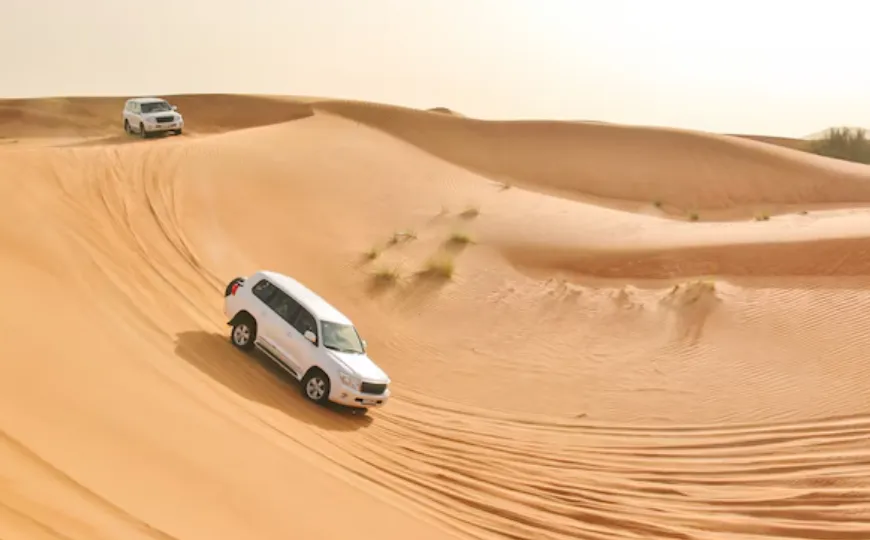
One of the first questions travelers ask about Fes to Marrakech desert tours is simple: how much should this cost? The honest answer is that price ranges widely, and the difference is rarely random. It usually comes down to group size, accommodation quality and whether the trip is run by people with genuine local roots. This guide breaks down what you pay for, so you can judge value rather than just comparing numbers, and choose confidently among Morocco desert tours and authentic Morocco tours.
The Route in Brief
The crossing covers roughly 700 kilometers, linking Fes and Marrakech through the Middle Atlas, the Ziz Valley, the Sahara and the High Atlas. Most tours run three or four days.
Day 1: Fes to Merzouga, via Ifrane, Azrou and the Ziz Valley, ending with a camel trek into the Erg Chebbi dunes and a night in camp.
Day 2: Merzouga to the Dades Valley, via sunrise over the dunes and a stop at Todra Gorge.
Day 3: Dades to Marrakech, via Ouarzazate, Aït Benhaddou and the Tizi n’Tichka Pass.
A four-day version adds a night in the Draa Valley or Ouarzazate.
What Drives the Price of Morocco Desert Tours
1. Group Size
- Large group tours: The lowest price point, sharing a minibus with other travelers on a fixed schedule.
- Small group tours: A modest step up, usually 6 to 12 travelers, with slightly more flexibility.
- Private tours: The highest price, but with a dedicated vehicle, guide and the freedom to stop wherever you like.
2. Accommodation Level
- Budget guesthouses and traditional camps: Simple, clean and often family-run, with shared bathrooms in some cases.
- Mid-range riads and comfort camps: Private bathrooms, better bedding and more thoughtful design.
- Luxury riads and desert camps: Spacious suites, heating in winter, air conditioning in summer and refined dining.
3. Guide and Driver Quality
Experienced driver-guides with strong regional knowledge cost more to hire, but they are often the single biggest factor in how much you actually learn and enjoy along the way. A guide who can explain the history of Aït Benhaddou or introduce you to a family in the Dades Valley adds value that is hard to price but easy to notice.
4. Season
Spring and autumn are the busiest months, and prices for private tours and luxury camps tend to rise. Winter and summer, while less comfortable in some ways, often come with lower rates and quieter roads.
5. What Is Included
Always check exactly what a quoted price covers:
- Transport and fuel
- Accommodation each night
- Meals (breakfast, lunch, dinner, or a mix)
- The camel trek and desert camp
- Entrance fees to sites such as Aït Benhaddou or Todra Gorge
- Guide fees, separate from the driver in some cases
Tips, drinks and optional activities are usually extra, so ask in advance to avoid surprises.
What “Authentic” Adds to the Price, and the Experience
Authentic Morocco tours are not always the cheapest option, but they are rarely the most expensive either. What they add is often invisible on a price list:
- Local guides and drivers who share personal stories rather than scripts
- Family-run riads, kasbahs and camps that keep income in local communities
- Hands-on experiences, such as bread baking, tagine cooking or a cooperative visit
- Small groups or private travel, allowing spontaneous stops and real conversation
- Responsible practices, including fair wages and respect for local customs
A modest premium for these elements often buys a noticeably richer trip, since the money supports the people you are actually traveling among.
A Simple Way to Compare Quotes
When two Fes to Marrakech desert tours differ in price, ask:
- Is the vehicle private or shared?
- What type of camp is included? Traditional, comfort or luxury.
- Are meals included, and are dietary needs accommodated?
- What is the guide’s background and experience?
- Are entrance fees and the camel ride included, or extra?
- What does the operator say about how it works with local communities?
Comparing answers, not just totals, usually reveals which quote offers real value.
Best Time to Book for Value
- Spring (March to May): Popular and often pricier, especially for private tours. Book early.
- Autumn (September to November): Similarly popular, with comfortable weather.
- Winter (December to February): Often better value, though desert nights are cold, so confirm camp heating.
- Summer (June to August): Lower demand inland due to heat, which can mean better rates, but daytime conditions are demanding.
Practical Tips
Pack a light scarf for sun and sand, sunglasses, sunscreen, sturdy shoes and a warm jacket for the evening. A power bank is useful, since charging in camp is limited. Take a small daypack to the dunes and leave your main luggage in the vehicle. Carry small cash for tips, market purchases and any extras not included in your quote.
Conclusion
Understanding what drives cost helps you choose wisely among Fes to Marrakech desert tours. The cheapest option is not automatically a bad choice, and the most expensive is not automatically the best, but the details behind the price, group size, camp quality, guide experience and local partnerships, usually tell the real story. When those details lean toward small groups, family-run stays and knowledgeable local guides, you are looking at genuinely authentic Morocco tours, and some of the most rewarding Morocco desert tours available.
Compare quotes carefully, ask specific questions and choose the operator whose answers, not just whose price, convince you.